
AI at scale without brand drift: Governance that holds
AI / Agentic Governance: Teams adopt AI fast. Output volume goes up. Brand coherence breaks.
Two organisations proved governance makes AI speed safe.
- Brand-safe self-service
- Quality thresholds defined
- No drift at scale
The situation
Teams adopt AI tools fast. Output volume goes up. Brand coherence breaks. The tools work — but without governance, they accelerate drift rather than execution.
Two organisations proved AI can scale brand operations without fragmenting identity. One integrated AI governance into existing brand infrastructure for self-service workflows. The other built decision architecture for agentic AI generating campaigns at speed. Both solved the same core problem: AI multiplies output — governance makes it brand-safe.
Case Study
AI-Enabled Brand Operations
Problem
Build
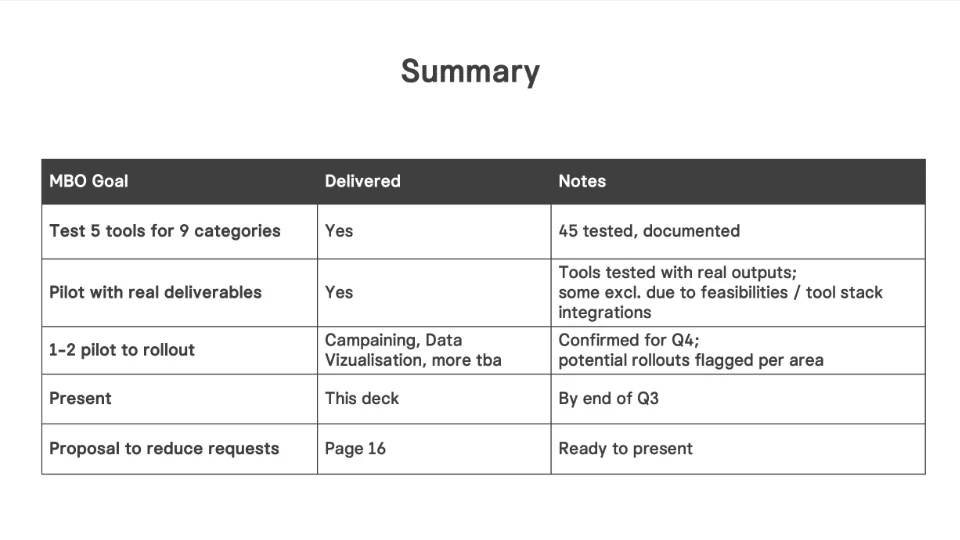
- Structured AI tool evaluation framework with decision criteria
- Pilots in production contexts (what ships, what needs review)
- Custom GPTs for brand validation and tone of voice
- AI governance integrated with existing brand infrastructure
- Quality thresholds + review logic defined
- Legal and compliance alignment
Outcome
- Brand-safe self-service operational
- Manual steps reduced
- Faster campaign iteration
- No drift at scale
Case Study
Agentic AI Campaign Governance
Problem
Build
- Decision architecture for agentic AI output (what AI decides autonomously, what requires human review)
- Governance framework: quality thresholds, brand-safe boundaries, review logic
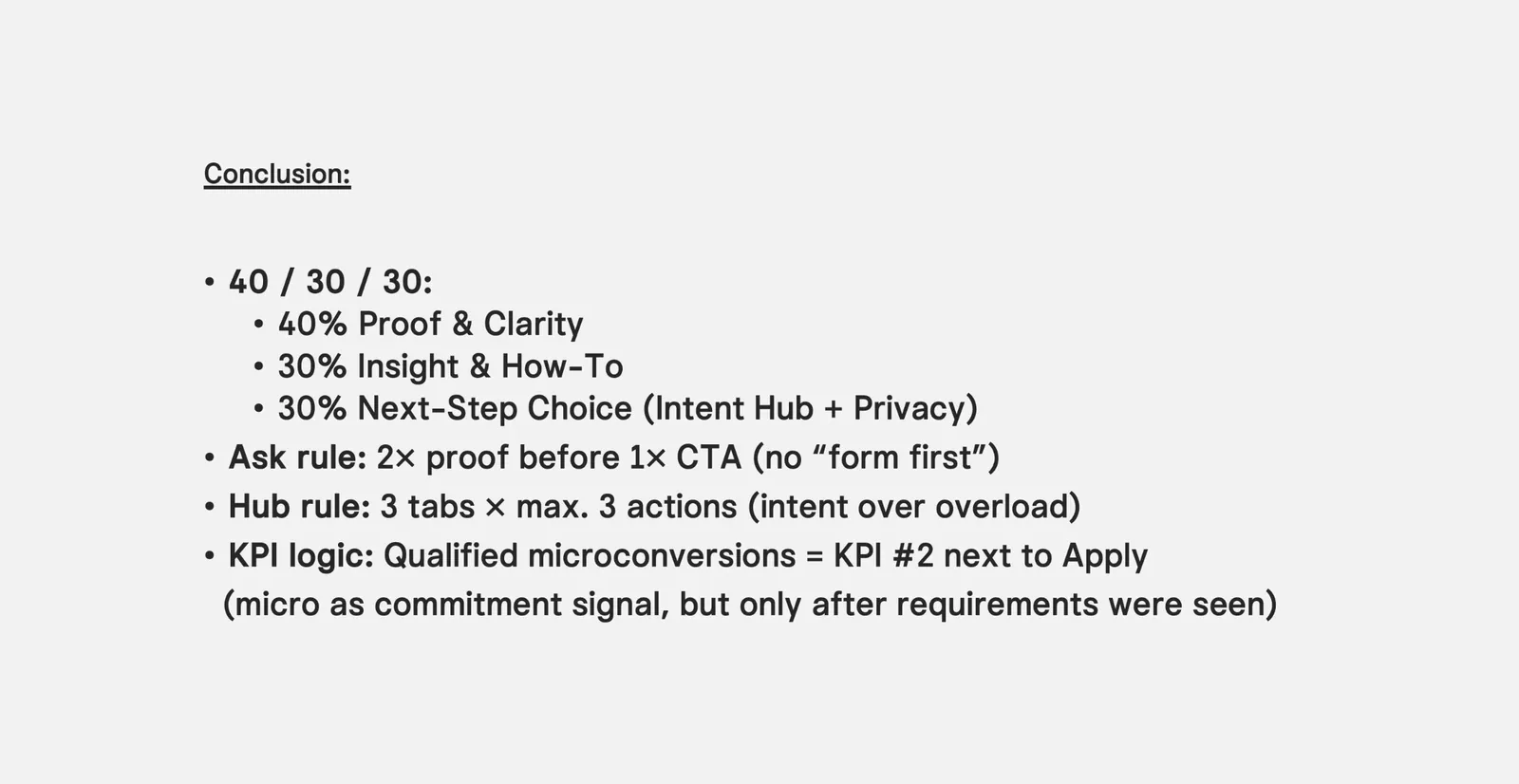
- KPI system for AI output quality beyond volume metrics
- Repeatable implementation blueprint
Outcome
- Repeatable strategic pattern
- AI campaigns at scale
- Brand coherence holds
The pattern
AI without governance is just faster chaos. Both cases proved the same architecture works: define what AI decides autonomously, what needs review, and what constitutes brand-safe output. Then integrate that logic into existing systems.
The infrastructure case embedded AI governance into the brand platform — evaluation frameworks, review thresholds, custom GPTs aligned with brand standards. The agentic case built decision architecture for autonomous AI — quality boundaries, human escalation triggers, and KPIs beyond volume.
The shared principle: governance isn’t about slowing AI down. It’s about making speed safe. Clear boundaries. Quality thresholds. Review logic that scales.
When this applies
- Teams are using AI tools but output quality is inconsistent
- Brand coherence is breaking as AI content volume increases
- No governance layer exists for AI-generated content
- Agentic AI is generating campaigns or content at scale without quality boundaries
- Speed is up but trust in AI output is down