
600K €/year saved + 50% faster GTM: When brand guidelines finally worked
Brand Infrastructure: Guidelines exist. Platform implemented. Teams still can’t execute.
Two cases show what actually makes brand systems scale.
- 600K €/year cost savings
- 81% ↑ asset downloads
- 50% faster GTM
The situation
Brand guidelines exist. The platform is implemented. Teams have access. But GTM is still bottlenecked, campaigns are slow, and nobody can execute without routing everything through one central team. The system looks complete… but it doesn’t work.
Two organisations solved this differently. One built the infrastructure to enable distributed execution at scale. The other built the production capabilities so teams could actually ship. Both proved the same pattern: guidelines alone don’t scale; systems do.
Case Study
Brand Infrastructure That Enables
Problem
Build
- Strategic review + missing components defined
- Platform as single source of truth
- Enablement hubs with ready-to-use collateral
- Governance model with usage principles
- Adoption metrics tracked
Outcome
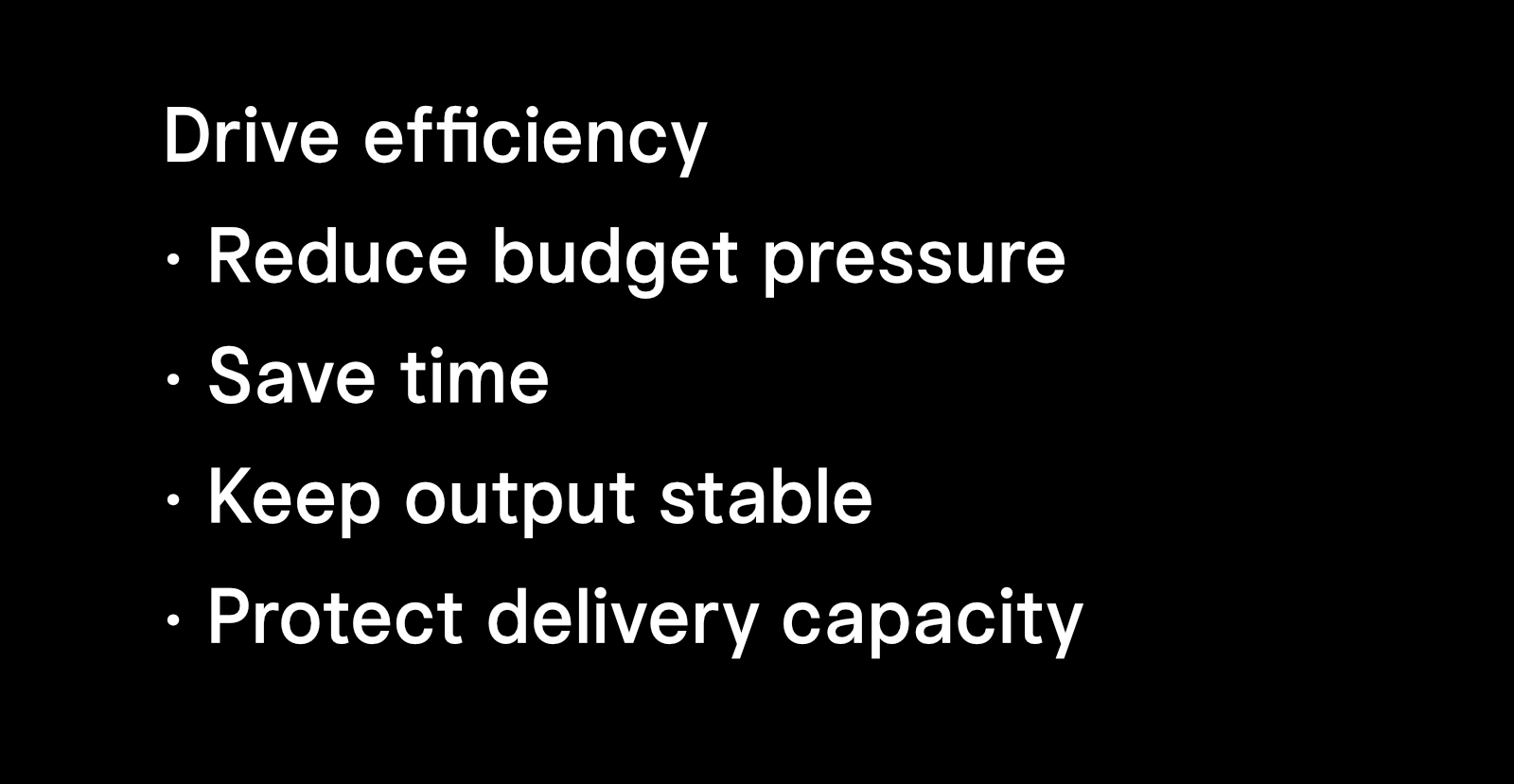
- 600K €/year cost savings
- 560% risk-adjusted ROI
- 81% ↑ asset downloads
- 61% ↑ external usage
- 25% ↑ guidelines views
- Reduced ad-hoc requests
- Reduced central dependency
Case Study
Production Capabilities That Ship
Problem
Build
- CMS & CRM complete overhaul (landing page design system, wireframes, briefing templates)
- Motion guidelines and capabilities build-out (enabled insourcing TV spot production)
- Design systems built to depth where licensees were trained on the systems
- Organisation-wide training and enablement
Outcome
- 50% faster GTM
- Core Web Vitals met
- Revenue drivers optimized
- TV spot production insourced
- Systems adopted by licensees
The pattern
Guidelines fail when they’re documentation without decision support. Both cases solved this by building the missing layer between ‘here are the rules’ and ‘here’s how to actually ship.’
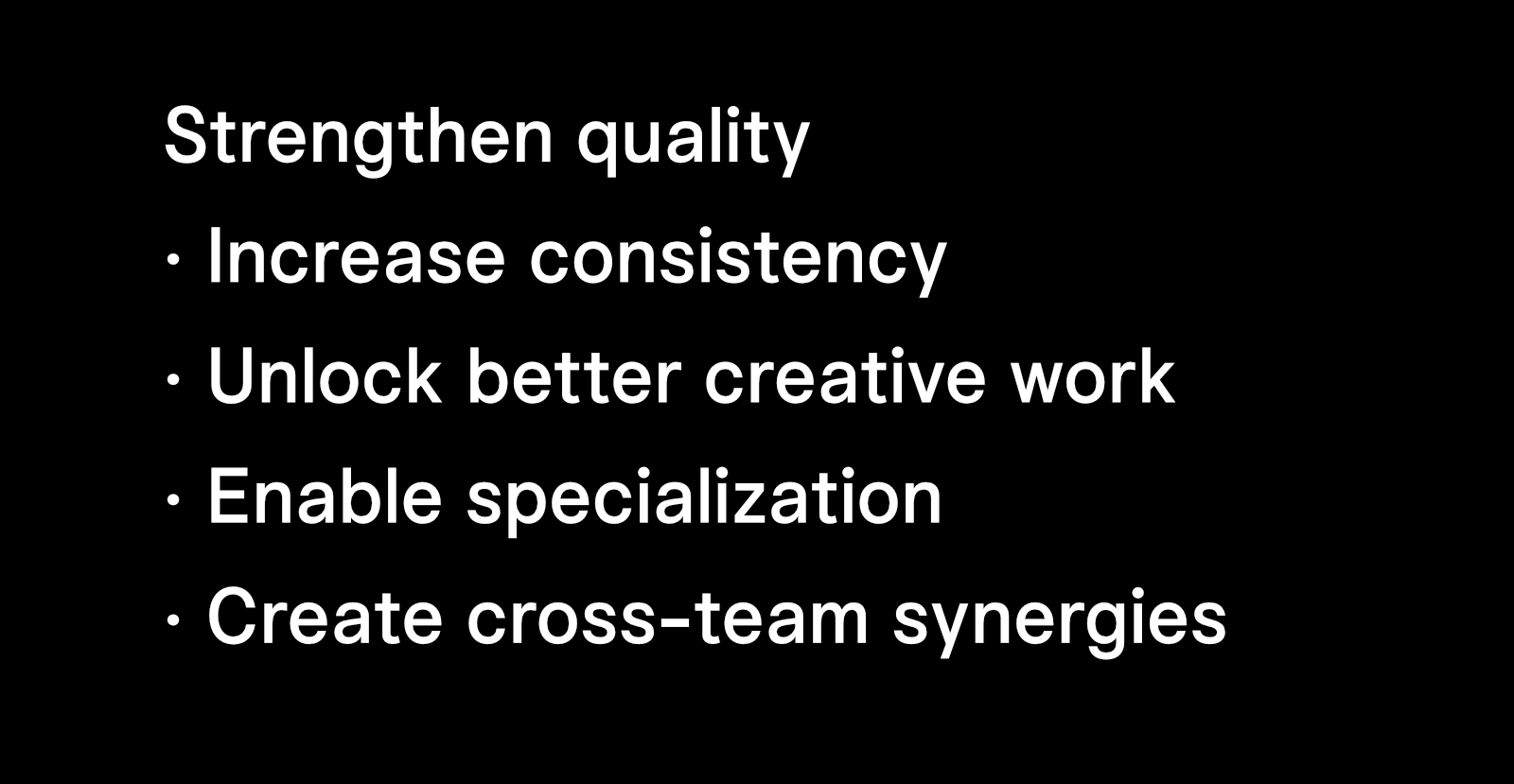
The infrastructure case focused on governance — usage principles, enablement hubs, and adoption tracking so teams could self-serve within guardrails. The production case focused on capabilities — design systems, motion workflows, and training so teams could execute without bottlenecking through central resources.
The common thread: both stopped treating brand as a policing layer and started treating it as an operating system. Clear decision rules. Reusable components. Measured adoption. Reduced dependency.
When this applies
- Guidelines exist but teams still route everything through central design
- Platform is implemented but adoption is low or ROI is unclear
- GTM is bottlenecked by brand review cycles
- Distributed or international teams execute inconsistently
- You’re scaling operations but brand isn’t keeping pace