
Brand has a missing time horizon. This is how you fill it
Every serious function in an organization runs on a time horizon.
We will have to navigate through growing uncertainty. No business can steer without open eyes.
Finance stress-tests scenarios. Product roadmaps 18 months ahead. Strategy models 3–5 year windows. Brand (the function responsible for what people believe about you, which stories earn trust, which promises hold under pressure) mostly runs on the campaign cycle.
That asymmetry was always a liability. AI-mediated environments made it visible faster. When agents summarize you before you show up, when proof surfaces are read before anyone reads your story, when the gap between “something shifted” and “your brand is now misrepresenting itself” is weeks rather than quarters — operating without a forward-looking practice stops being a strategic choice and starts being a structural risk.
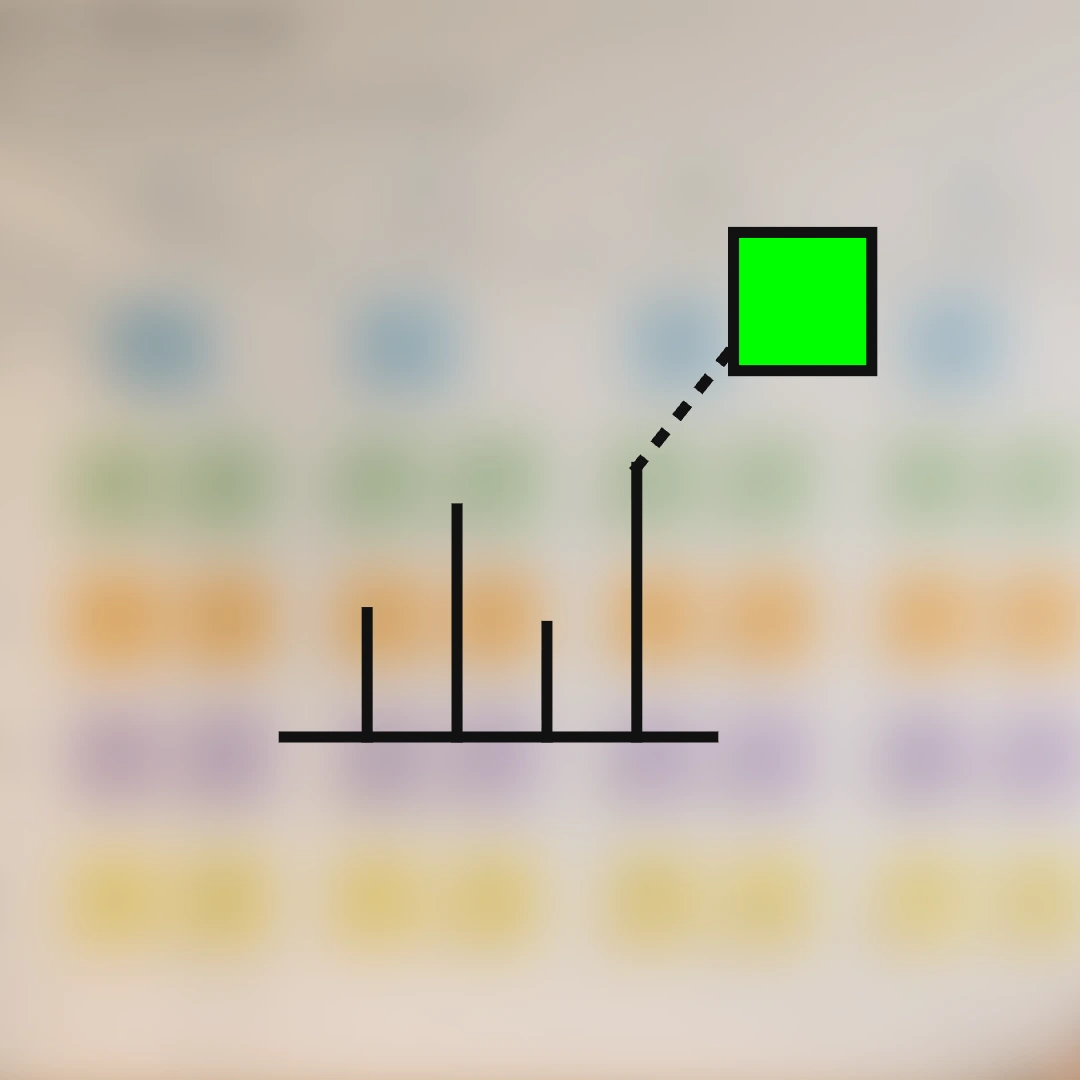
From observation to anticipation — the three sights that make a Futures practice operational: Sight, Insight, Foresight.
What a Futures seat is and what it isn’t
Not a trend report. Not a made-up prediction.
A decision-input function: Futures practice, a new seat at the table.
Most “futures thinking” in organizations is a newsletter someone sends, a deck from a two-day offsite with no owners attached, or a prediction function that loses credibility when the predictions don’t land.
A Futures seat is a decision-input function with a defined output. It senses emerging pressures, translates them into Brand OS implications, and hands them to the right module owners before the pressure becomes damage. And (this is the part no other function does for Brand) it tells you which stories to build toward.
Proof surfaces take time to establish. Voice compounds. Policy has lead time. A brand that only updates reactively is always telling last cycle’s story in this cycle’s environment.
Three things the seat owns:
- Pressure sensing: shifts with a traceable OS implication, not every signal
- Translation: map each pressure to affected Brand OS surfaces; one pressure can touch several modules simultaneously
- Activation: a name, a module, a review date; the Futures seat doesn’t own the update, it triggers it
What it doesn’t own: dashboards, strategy decks, execution. The moment it starts doing those things, it becomes either BI or strategy theatre.
Three organizations running this as an operating function
Volvo Group treats strategic foresight as a standing capability for decision fitness — not predicting outcomes, stress-testing whether current strategy survives in different worlds. Output: Updated decision assumptions, not a futures report.
Walt Disney International built fifteen Futures Teams across ten geographic regions: practitioners embedded in markets, not filtering relevance from HQ. Four years, 500+ leaders trained, integrated directly into strategic planning and performance management. The 2012 signal that media consumption was fracturing and consumers wanted control over when and how they consumed content came from those teams. It didn’t end up in a report. It ended up in strategy. Richard Ramsey, who led the Global Futures Team for six years: Foresight doesn’t let you predict the future — it lets you test whether your strategy survives in different worlds.
OECD / Finland: Anticipatory Innovation Governance shows what real integration looks like — defined roles, real handoffs, accountable owners. Not an innovation lab. Part of how decisions get made.
Tool: Futures Signal → Pressure → OS Implication card
Three registers. Each requires a different response. Boring on purpose. The point is auditability.
Micro signal: Regulatory or channel-specific, bounded timeline, operational decision.
- Signal: EU AI Act transparency obligations enter enforcement phase [date].
- Pressure: “Clear policy” now has a compliance floor. Current policy page was written for human readers, not structured disclosure requirements. Gap is specific and closeable.
- OS Implications: ☑ Policy ☑ Governance ☐ Claims / Proof / Support / Identity
- Owner / horizon / assumption / decision: Owner: Legal + Brand [named]. Hard deadline. Assumption: enforcement guidance follows published scope without material revision. Decision: “Legal reviews policy page against obligation checklist before any update ships.”
Macro signal: Structural trend, 12–24 month horizon, multiple OS surfaces.
- Signal: AI agents increasingly prefer structured, schema-marked data over unstructured brand content. Directionally certain; not yet universal.
- Pressure: Proof architecture built for human readers may not surface correctly in agent-mediated discovery. “Citeable” stops meaning readable and starts meaning machine-parseable — schema markup, knowledge graph presence, structured metadata. A brand without a semantic data strategy is increasingly invisible to the layer that does the recommending.
- OS Implications: ☑ Claims ☑ Proof ☑ Identity / Verification ☑ Governance ☐ Support
- Owner / horizon / assumption / decision: Owner: Brand + Tech [named — sits between functions, which is exactly why it needs an explicit owner]. Time horizon: 12–18 months. Quarterly review cadence. Assumption: our buyer segment’s discovery layer already weights structured data — not only early adopters. Decision: “Review quarterly against: schema adoption in category / agent citation patterns / competitor structured data investment. If two of three move, initiate proof architecture audit.”
Outlook: Speculative, 5+ years. No owner required. No decision required.
- This series opened with the funnel inverting; machines summarizing you before you get to show the brand.
- Assumption: If AI agents become the primary purchase executor, brand identity stops functioning as a hook that earns attention and becomes a trust credential in a machine-to-machine exchange. Holds the longer-horizon question so it doesn’t disappear — and resurfaces when macro signals start confirming it. The narrative question lives here: not “which module needs updating” but “which story does this brand need to tell in five years, and what would need to be true for it to be credible rather than just said?”
- Time horizon: Revisit when two major commerce platforms confirm agent-executed purchasing as a default flow. At that point the question is whether the current OS architecture is still the right frame at all.
What the tool outputs:
Pressures ranked by time horizon, OS surfaces named, owners assigned, decisions recorded. An update queue the sentry loop in module 10 can run against.
Filter: If a pressure has no OS implication, it doesn’t go on the card.
Closing thought
The campaign cycle is a planning assumption most brand functions have never questioned. It made sense when the environment shifted slowly enough that reactive updates didn’t compound. That’s no longer the condition.
A Futures seat doesn’t require a dedicated headcount or a foresight lab. It requires someone whose standing mandate includes asking: What pressure is building that our current Brand OS isn’t built for yet? And making sure the answer lands somewhere with an owner and a date.
If no one holds that question, the answer arrives anyway. Just later, and on worse terms.
With pressures named and owners assigned, the sentry loop becomes executable. Diagnostics → remediation → governance stops being reactive maintenance and starts running on triggers. Module 10 closes the loop so the same drift doesn’t recur.
Read
- Volvo Group: Strategic foresight
- OECD: Anticipatory Innovation Governance Model in Finland
- TFSX: Why business needs a better relationship with the future
- TFSX, Salvatico & Spencer: Disney’s Workforce of the Future
- Bain: Zero-click search
- Sofie Hvitved & Bugge Holm Hansen (CIFS): Liquid Foresight in an AI-Mediated World
- BCG: Consumers Trust AI to Buy Better. Brands Must Adapt.
Agentic Brand Thinking
- 01Your brand is how your systems behave when no one is looking
- 02Your values are not random vibes. They’re your AI-ready operating logic
- 03If AI can speak for you, your voice is now operational
- 04Proof is the new interface: What gets believed in AI-shaped journeys
- 05Policies are brand design
- 06If you don’t solve a real job, relevance is gone
- 07What to measure when touchpoints collapse into one answer
- 08Support is the new billboard
- 09 Brand has a missing time horizon. This is how you fill it
- 10At AI scale, drift kills trust before you notice
- 11Brand Gov x AI: Who can change what, when
- 12Identity has to survive machine compression
- 13Brands don’t travel. People carry them.
- 14Agentic Brand: The system is the strategy